What business casual means
Business casual is a workplace code. It keeps the polish of office wear (pressed, fitted, conservative) and drops the suit and tie. It is what most people picture as “office clothes” today.
The trouble is that it means different things in a law firm and in a start-up. Treat the lists below as the center of the range, and calibrate up or down by watching what senior people in your workplace wear.
Women: business casual outfits
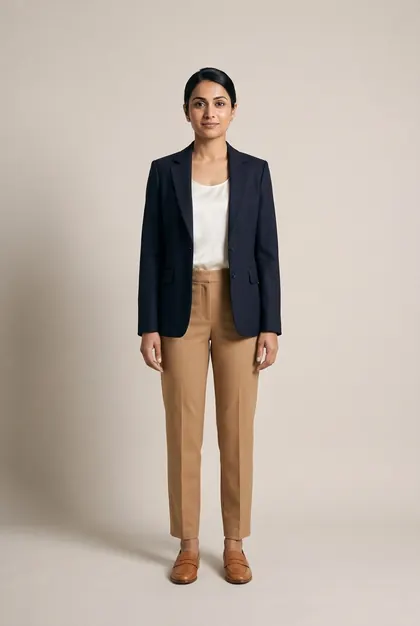
- Bottoms: tailored trousers, ankle pants, chinos, knee-length or midi skirts (pencil, A-line, pleated).
- Tops: blouses, shell tops, fine-knit sweaters, button-down shirts, knit tops in solid colors.
- Dresses: sheath, shirt and wrap dresses around knee length or longer.
- Layers: blazers, cardigans, structured jackets.
- Shoes: loafers, ballet flats, low or block heels, ankle boots. Closed toes are the safe default.
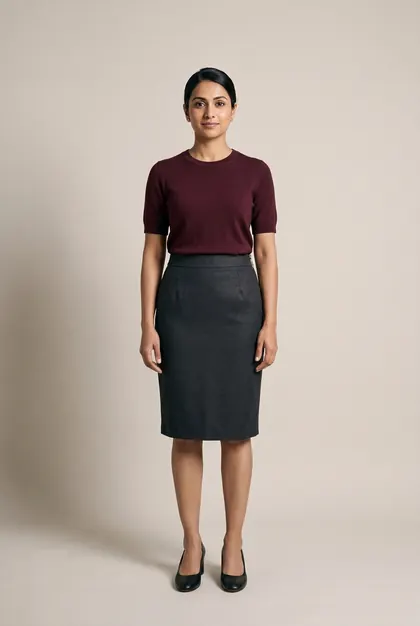
Example: a burgundy knit top tucked into a charcoal pencil skirt with black pumps. Add a blazer for client meetings.
Men: business casual outfits
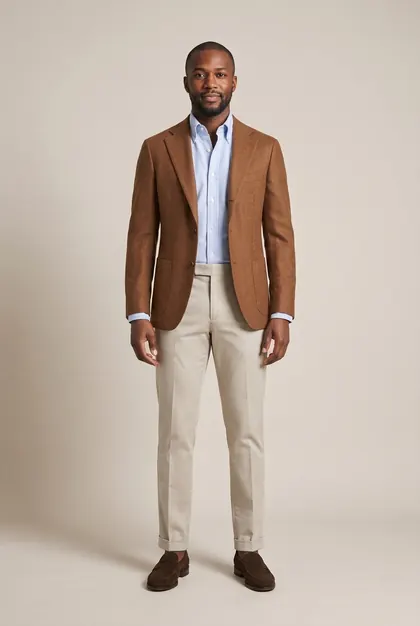
- Trousers: chinos in khaki, navy, olive or grey; wool or cotton dress trousers.
- Shirts: button-down or point-collar shirts in solid colors, stripes or small checks; polos in some offices.
- Layers: V-neck or crew-neck sweaters over a collared shirt, quarter-zips, an optional blazer.
- Shoes: loafers, derbies, brogues, chelsea boots; a belt that matches.
- No tie needed.
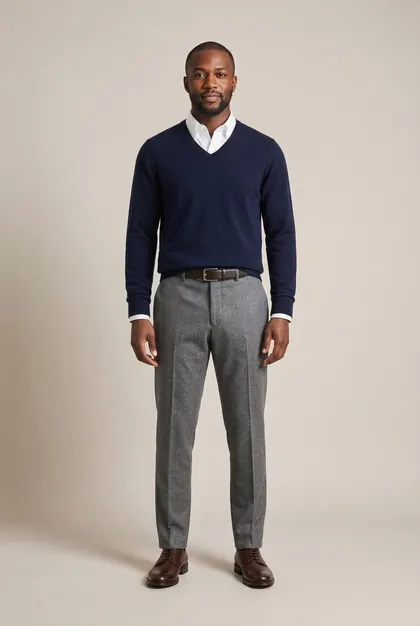
Example: a navy V-neck sweater over a white button-down shirt, grey wool trousers and brown derbies.
Anything else: any gender and cultural dress
- A blazer or long cardigan over a plain knit or shirt, with tailored trousers.
- Tailored jumpsuits in matte fabrics.
- Polished cultural or religious workwear, such as a kurta with trousers, an abaya, a dashiki-style shirt with trousers, or a head covering, is business casual when it is neat and conservative.
Jeans and sneakers at work
- Jeans
- In tech, media and many creative workplaces, dark and unripped jeans are normal. In finance, law, government and client-facing roles they are often limited to Fridays, or not allowed at all.
- Sneakers
- Clean, minimal leather sneakers are accepted in many offices now. Athletic or worn sneakers are not business casual anywhere.
If your employer has a written dress policy, it overrides general guidance. When starting a new job, dress one notch up for the first week and adjust.
Business casual by industry
- Tech and start-ups
- The relaxed end: dark jeans, knitwear, leather sneakers.
- Creative and media
- Relaxed but more expressive: interesting textures and color are welcome.
- Finance, law, consulting
- The conservative end: trousers, collared shirts, blazers on hand, no jeans.
- Healthcare, education, public sector
- Practical and modest: easy-care trousers, cardigans, comfortable closed shoes.
Business casual for interviews
If an interview invitation says business casual, dress at the polished end: tailored trousers or a skirt, a blouse or collared shirt, and a blazer. You can always take the blazer off. For a role in a conservative industry, a suit is rarely wrong even when the invite says business casual; for a start-up, a blazer over a knit is usually enough.
Summer and winter
- Summer
- Lightweight cotton and linen-blend trousers, short-sleeve blouses and shirts, breathable dresses. Sandals depend on the office; sleeveless tops are fine in many, but keep a layer at your desk.
- Winter
- Wool trousers, merino and cashmere knits, ankle boots and a tailored coat.
Business casual vs smart casual
The two overlap heavily. Business casual is the workplace version and tends to be a little more conservative (trousers over jeans, collars, closed shoes). Smart casual is the social version, with more room for denim, color and sneakers.
Seeing a different wording on an invitation? Try the dress code decoder.
What to avoid
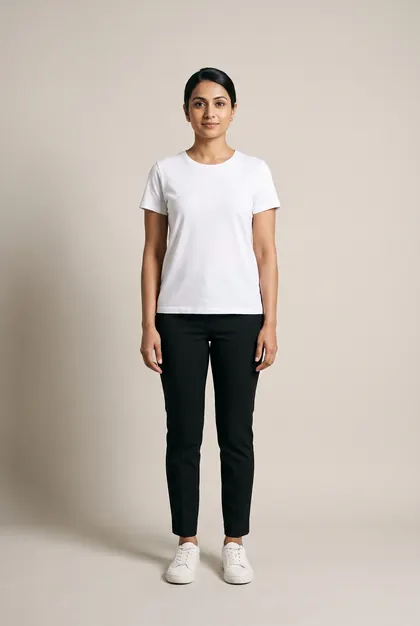
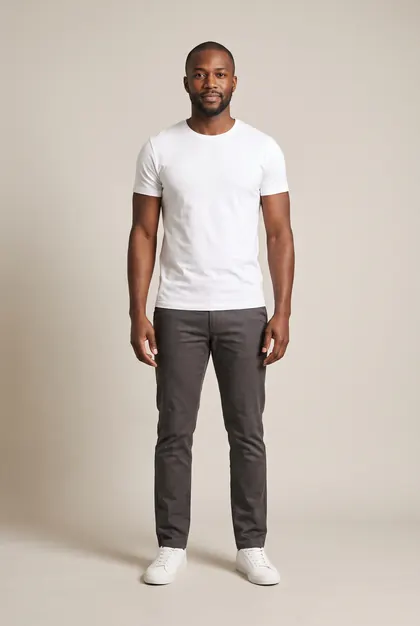
- Hoodies, graphic tees, sportswear and leggings worn as trousers.
- Distressed or faded denim.
- Shorts, flip-flops and beachwear.
- Very short hemlines, low necklines and see-through fabrics.
- Wrinkled or stained clothing; business casual relies on looking cared-for.
Questions people ask
Are jeans business casual?
It depends on the workplace. Dark, plain jeans are normal in many tech and creative offices but not in conservative industries. When in doubt, wear chinos or trousers.
Do I need a blazer for business casual?
No, but keep one at work or bring one for meetings with clients or senior leaders.
Is a polo shirt business casual?
In many offices, yes, if it is plain and fits well. In conservative workplaces, a collared button shirt is safer.
What is business casual for an interview?
The polished end of the range: tailored trousers or a skirt, a shirt or blouse, a blazer, and leather shoes.